A salon on the corner runs five years with the same sign out front, and still looks different on Google than it did last year. A men's section got added, perms got dropped, a new owner bought the place and gave it her own name. Nobody thinks to tell Google, because in your head it's still the same business.
Google doesn't know it's "still the same business." It only knows two fields, name and category, and search runs off those. When they drift from what's actually happening inside, the salon doesn't vanish. It just stops showing up in the searches that used to bring people in, and nothing announces it.
What actually drifts on a salon's listing
Two things move more at a salon than almost anywhere else, and both come from inside the business itself. A salon gets renamed when it changes hands or rebrands, and the old name sits in the profile until somebody remembers to fix it. The category doesn't grow with the menu either: add men's cuts or drop perms, and the listing stays filed exactly as whoever first set it up left it.
Google's own guidance points at the first setup, not a check three years later, and almost nobody runs that check on their own:
"Choose as few categories as possible from the list, while making sure they accurately represent your main business."
Guidelines for representing your business on Google, Google Business Profile Help, read September 14, 2026
The category doesn't even need you to change it wrong. Anyone who views the profile can suggest a correction, described in full on the changed listing page.
A bad category doesn't announce itself the way a closed branch would. The salon still exists right where it always did, the same receptionist answers the phone, the rating still looks fine. What's missing is only the people who searched "salon" or "barbershop" nearby and never saw you in the results.
Why one review moves a salon more than most
You can photograph a dish, taste it off a friend's plate, or send it back if it's wrong. You can't try on a haircut. Someone choosing a new salon has nothing to lean on but stars and a few photos, and decides before any of it can be checked.
The fewer reviews a profile has, the more each one weighs, good or bad, because it's dividing a smaller number. A card at the register doesn't fix that by itself. It just explains why one lost or one won review moves a small salon further than it would move a business with hundreds behind it.
Plenty of salons rent chairs to multiple stylists, each running their own business under one roof. The Google profile is still one listing, and reviews talk about people, not the shop: "Amy cut my hair perfectly," "I waited longer than the front desk promised." One star over one person's experience moves the rating of the whole salon.
The screen behind the card doesn't sort any of that out, because it doesn't know who the guest is until they choose. It offers a public Google review and a private message to the owner side by side, with equal weight, so a complaint about one chair can go privately instead of publicly against the whole salon. A salon with more than one chair can run more than one card, each with its own code, all pointing at the same listing.
What you can do when you ask for a review
A guest sitting with foil in their hair or wet from a wash can't just get up and leave. That is exactly the situation Google has in mind when it says what's off-limits when asking for a review.
"Requiring or encouraging the posting of content that reflects a genuine customer experience without offering incentives associated with it."
Maps User Generated Content Policy, read September 14, 2026
No discount or gift in exchange, no filling out a form while a guest is still in the chair, and no hinting at what the review should say. The card doesn't need any of that to work. It offers a review and a message side by side, and the guest chooses without anyone waiting on an answer. The complete rules, with sources and dates, are on the review policy page.
Where the card actually goes in a salon
The station where hair gets washed and cut is wrong for it: blow dryers, flat irons, and hairspray live there, and the surface near the sink is wet most of the day. A shelf by the mirror doesn't work either, because a guest is looking at themselves, not at what's beside them. A card there gets lost under a towel or gummed up with product within a week.
The register is where a guest actually stands with a free moment. That's where they pay, phone already in hand, waiting for change or a receipt. A card at the register just uses a moment that was already going to happen.
Setting one up needs nothing about an individual client, only the salon's name and its Google listing link. No client file, no booking system connection, no contact import. The screen a guest sees after tapping their phone never gets paired with them, it doesn't know their name or which chair they sat in.
What runs once it's on the counter
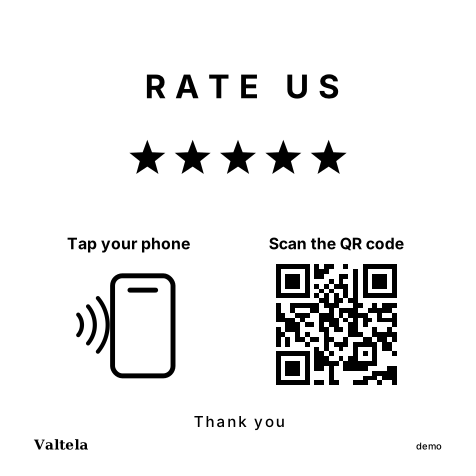
The card offers a Google review and a private message side by side. Alongside it, watching runs every night: we re-check your listing and compare it against yesterday, including the two fields that drift most at a salon, name and category. When something changes, an email arrives the same day with the old and new values side by side.
A monthly report and a yearly summary arrive on their own, too. A yearly license runs $599, and a card is a thing you buy once, not a monthly charge per seat, with an extra one at $79 a year. The exact breakdown is on pricing.
Next step
What Google's rules allow and forbid when asking for a review, sourced and dated, are on the review policy page. Who can suggest a change to your listing and how you find out the same day, is on the changed listing page. And what the card does once a guest picks it up is on the card page.
Sources
Every citation on this page comes from one of these pages. The link goes to the original source, not to our summary of it.